Whey protein in Pakistan: real vs fake, how to check, and is it worth the price?
How to spot fake or adulterated whey protein in Pakistan, what to check on the tub and label, how to compare prices by cost per 25 g of protein, and whether you need whey at all.
Key points
- Whey is simply milk protein in powder form. It's convenient, but not essential if you eat enough protein from food.
- Counterfeit and "amino-spiked" protein products are a real risk. Buy from authorised sellers, and check seals, batch numbers, expiry dates and import details.
- Compare products by cost per 25 g of protein, not price per tub.
- Look for third-party testing certifications where available, and be wary of prices that are far below the market.
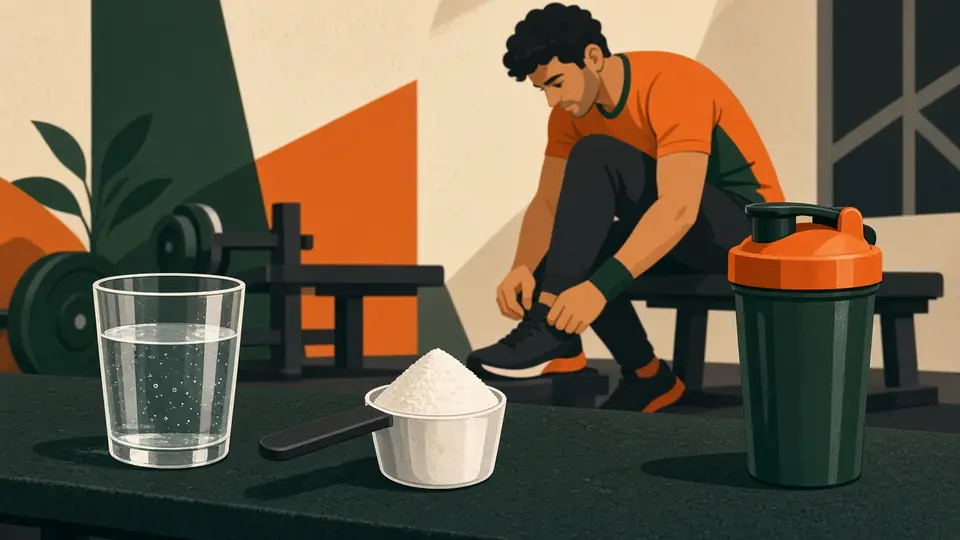
Whey protein is probably the most popular supplement in Pakistani gyms, and one of the most faked. Tubs with copied labels, refilled containers, imported-looking brands nobody has heard of, and prices that seem too good to be true are common complaints.
This guide explains what whey actually is, how to reduce the chance of buying a fake, how to compare value properly, and whether you need it at all.
What is whey protein?
Whey is one of the two main proteins in milk (the other is casein). When milk is made into cheese, the liquid whey is separated, filtered and dried into powder. It's a complete protein, containing all essential amino acids, and is digested fairly quickly.
Main types:
- Whey concentrate: typically around 70–80% protein by weight, with some lactose and fat. Usually the cheapest.
- Whey isolate: filtered further to about 90% protein, with less lactose. Often easier for people with mild lactose intolerance.
- Hydrolysed whey: partly pre-digested. Usually more expensive, with little practical advantage for most people.
Do you even need whey?
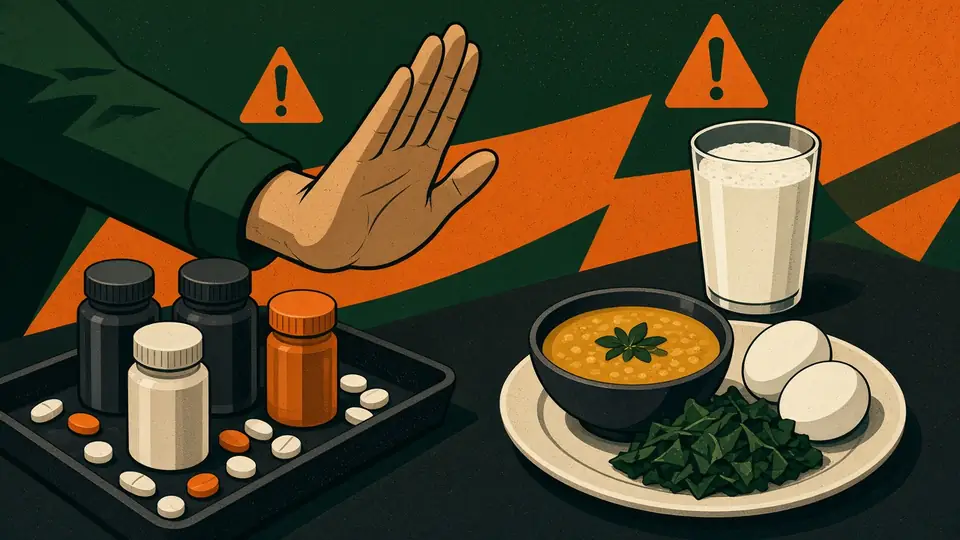
Not necessarily. Muscle growth depends on your total daily protein, roughly 1.6 g per kg of body weight for people who lift weights, according to research reviews. You can get this from eggs, milk, dahi, daal, chana, chicken and meat. See our gym diet plan for Pakistani men.
Whey makes sense when:
- You struggle to reach your protein target from food
- You need a quick option after training or at work
- You don't eat much meat
It's a convenience food, not a magic powder.
The fake whey problem
Supplement counterfeiting is a global problem, and Pakistan's market is particularly exposed because many products are imported, prices are high, and enforcement is limited. Problems include:
- Counterfeit tubs copying well-known brands
- Refilled containers, where old genuine tubs are filled with cheaper powder
- Protein spiking (amino spiking): adding cheap amino acids such as glycine or taurine to make the protein content look higher on lab tests
- Expired or badly stored stock, kept in hot shops or warehouses
- Undeclared ingredients: sometimes stimulants or other substances in "pre-workout" or "mass gainer" products
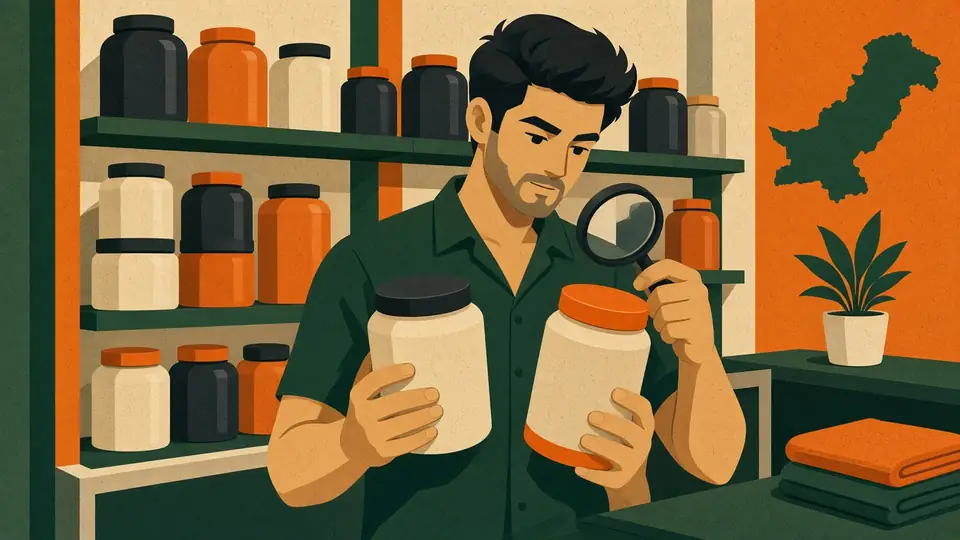
How to check whether your whey is genuine
No home test is 100% reliable, but these checks reduce your risk.
Where you buy
- Buy from authorised distributors or the brand's official sellers. Many international brands list authorised importers on their websites.
- Be cautious of random social media sellers and prices far below other shops.
- Ask the seller for the import documents or authorised dealer details. Genuine sellers usually don't mind.
The packaging
- Seal: the inner foil seal under the lid should be intact and properly fixed.
- Print quality: blurred printing, spelling mistakes, misaligned labels or stickers over the original label are warning signs.
- Batch number and expiry date: they should be printed clearly (often embossed or laser-printed), match on the tub and label, and not look tampered with.
- Verification codes: many brands put scratch codes or QR codes on tubs. Verify them on the brand's official website, not a link printed on the label, which can also be faked.
- Importer sticker: imported food supplements should carry the importer's details. Missing details are a red flag.
The powder
These are hints, not proof:
- Mixability: genuine whey usually mixes reasonably well in water with a shaker. Large lumps that don't dissolve can be a warning sign, but some genuine products also clump.
- Smell and taste: compare with a product you trust. Very odd, chalky or chemical tastes are suspicious.
- Scoop size: the scoop should roughly match the serving size on the label.
Viral "home tests" such as burning the powder or heating it in water aren't reliable ways to tell real from fake.
Third-party testing
Some brands carry independent certifications, such as Informed Sport, Informed Choice or NSF Certified for Sport, which test batches for banned substances and label accuracy. These can be checked online on the certifier's website. They're especially important for competitive athletes.
How to compare whey prices properly
Prices change often, and differ between cities and sellers. Instead of comparing price per tub, compare the cost per 25 g of protein:
- Find the protein per serving and servings per container on the label.
- Total protein in the tub = protein per serving × servings.
- Cost per gram of protein = tub price ÷ total protein.
- Multiply by 25 for the cost of a 25 g dose.
Example (illustrative numbers only): a tub priced at Rs X with 70 servings of 24 g protein contains 1,680 g of protein. The cost per 25 g is (Rs X ÷ 1,680) × 25.
Then compare with food. In Pakistan, eggs, milk, daal and chana usually provide protein at a lower cost per gram than imported whey.
Is whey safe?
For healthy adults, whey protein in normal amounts is considered safe. Possible issues:
- Bloating or loose stools, especially with concentrate if you're lactose intolerant. Try isolate, or smaller servings.
- Milk allergy: avoid whey.
- Kidney disease: talk to a doctor before increasing protein. In healthy people, research hasn't shown that normal high-protein diets damage the kidneys.
- Acne: some people notice breakouts with dairy and whey, though evidence is mixed.
- Hidden ingredients in fake or low-quality products are the bigger risk.
Whey vs mass gainers
"Mass gainers" are mostly carbohydrate (often maltodextrin and sugar) plus some protein. They're an expensive way to add calories. For skinny guys, homemade shakes with milk, banana, oats and peanut butter do the same job. See our weight gain diet for skinny guys.
See a doctor promptly if
- You have kidney disease, liver disease or another long-term condition before using protein supplements.
- You develop rashes, swelling, vomiting or breathing trouble after a shake. That could be an allergic reaction; stop and seek help.
- You have persistent stomach upset. You may be lactose intolerant, and a different product (or food) may suit you better.
Frequently asked questions
How can I check if my whey protein is original?
Buy from authorised sellers, check the seal, print quality, batch number and expiry date, and verify any scratch or QR code on the brand's official website. Be wary of unusually low prices.
Is whey protein necessary for muscle gain?
No. Total daily protein matters, and food can provide it. Whey is a convenient option if you struggle to eat enough.
How much whey should I take per day?
Most people use 1 scoop (around 20–30 g of protein) once a day to top up food protein. Your total daily protein from all sources matters most.
Does whey protein damage the kidneys?
In healthy people, there's no good evidence that normal high-protein diets harm the kidneys. People with existing kidney disease should follow their doctor's advice on protein.
Can I take whey without going to the gym?
You can, but it's just extra calories and protein. Without training, it won't build muscle by itself.
Sources
- Jäger R, et al. International Society of Sports Nutrition position stand: protein and exercise. Journal of the International Society of Sports Nutrition, 2017.
- Morton RW, et al. Protein supplementation and resistance training-induced gains in muscle mass and strength. British Journal of Sports Medicine, 2018.
- US Food and Drug Administration. Dietary supplements.
- NIH Office of Dietary Supplements. Dietary supplements for exercise and athletic performance.
- Informed Sport. Certified product search.
- MedlinePlus. Lactose intolerance.
Sources were checked on 26 November 2026. Found an error? Tell us and we will correct it.
Medical disclaimer: This article is general information, not a diagnosis or treatment plan. Please talk to a qualified doctor about your own situation. Read our full disclaimer.