Gym diet plan for Pakistani men: desi food, low budget, real results
A complete gym diet plan using Pakistani food: how much protein you need, cheap desi protein sources, sample meal plans for muscle gain and fat loss, and what to eat before and after the gym.
Key points
- For building muscle, research supports roughly 1.6 g of protein per kg of body weight per day (around 110–120 g for a 70 kg man), spread across 3–5 meals.
- You can hit that with anday, doodh, dahi, daal, chana, chicken and qeema. Supplements are optional, not required.
- Calories decide whether you gain or lose weight. Eat a little more than you burn to bulk, a little less to cut.
- Keep it simple: protein at every meal, plenty of roti or rice around training, vegetables daily, and enough water and sleep.
Walk into any gym in Lahore, Karachi or Peshawar and you'll hear the same thing: "Bhai, diet ke baghair kuch nahi hota." That's true. But most diet plans online are written for people eating oats, broccoli and imported salmon. You don't need any of that.
This guide shows you how to build a gym diet plan from normal Pakistani food, on a normal budget, whether your goal is to build muscle, gain weight or lose belly fat while getting stronger.
Step 1: know your goal
Your diet depends on what you want:
- Muscle gain (bulking): eat slightly more calories than you burn, with plenty of protein.
- Fat loss (cutting): eat slightly fewer calories than you burn, with high protein to protect muscle.
- Recomposition: for beginners who are slightly overweight, eating around maintenance with high protein and training hard can build muscle and lose fat at the same time.
If you're very skinny and struggle to gain, see our weight gain diet for skinny guys.
Step 2: get your protein right
Protein provides the building blocks for muscle. A large review of studies (Morton et al., 2018) found that for people doing resistance training, benefits for muscle growth plateau at around 1.6 g of protein per kg of body weight per day, with some people benefiting from up to about 2.2 g/kg.
| Body weight | Daily protein target (about 1.6 g/kg) |
|---|---|
| 55 kg | About 90 g |
| 65 kg | About 105 g |
| 75 kg | About 120 g |
| 85 kg | About 135 g |
Spread it across 3–5 meals, with roughly 25–40 g at each.
Cheap desi protein sources
Protein content is approximate and varies by brand and preparation:
| Food | Portion | Approx. protein |
|---|---|---|
| Eggs (anday) | 2 large | 12–13 g |
| Milk (doodh) | 1 glass (250 ml) | 8 g |
| Dahi | 1 cup (200 g) | 7–10 g |
| Daal (cooked) | 1 bowl (200 g) | 14–18 g |
| Chana (boiled) | 1 cup (160 g) | 14 g |
| Chicken breast (cooked) | 100 g | 30 g |
| Beef qeema, lean (cooked) | 100 g | 25 g |
| Fish (cooked) | 100 g | 20–25 g |
| Paneer | 100 g | 18 g |
| Peanuts | 30 g (small handful) | 7 g |
| Chakki atta roti | 1 medium | 3–4 g |
Eggs, milk, dahi, daal and chana are usually the cheapest protein per gram in Pakistan. Chicken is good value too. Combining daal or chana with roti or rice gives a fuller mix of amino acids.
Step 3: eat enough calories
Protein alone won't build muscle if you're not eating enough overall. A rough starting point:
- Maintenance: about 30–35 calories per kg of body weight per day for an active man (for a 70 kg man, about 2,100–2,450 calories).
- Bulking: add about 250–500 calories a day. Aim to gain around 0.25–0.5 kg per week.
- Cutting: subtract about 300–500 calories a day. Aim to lose around 0.5 kg per week.
These are estimates. Weigh yourself every morning for a week and use the weekly average. If the average isn't moving the way you want after 2–3 weeks, adjust by 200–300 calories.
Step 4: carbs and fats aren't the enemy
- Carbohydrates (roti, chawal, aloo, oats, fruit) fuel your training. Eat a good portion in the meals before and after the gym.
- Healthy fats (nuts, eggs, a moderate amount of desi ghee or oil, fish) support hormone health. Don't drop fat too low.
- Vegetables and fruit provide fibre, vitamins and minerals for recovery. Aim for some at every meal.
Sample gym diet plan: muscle gain (about 2,800 calories, 130 g protein)
For a 70–75 kg man training 4 days a week:
| Meal | Food |
|---|---|
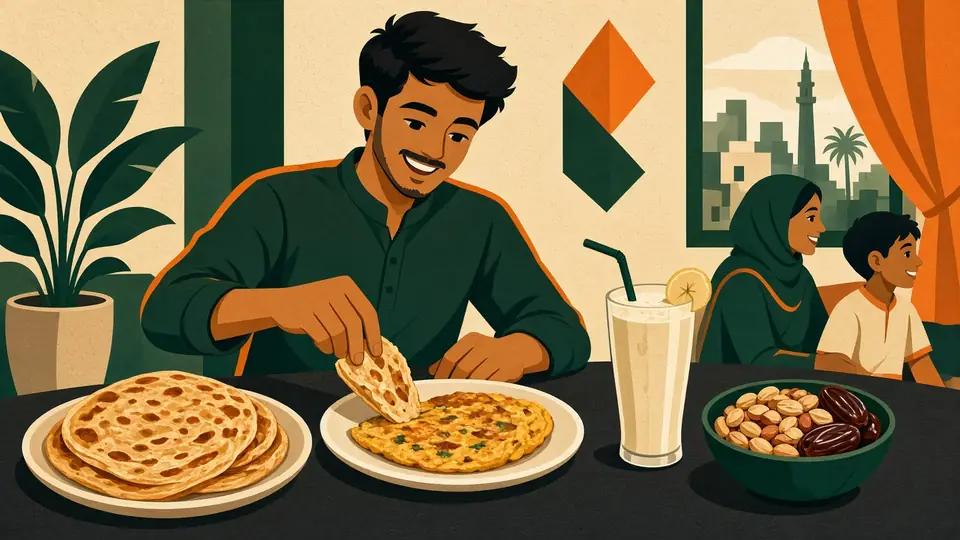
| Breakfast | 3-egg omelette with onion and tomato, 2 chapatis, 1 glass milk |
| Mid-morning | 1 banana, a handful of peanuts |
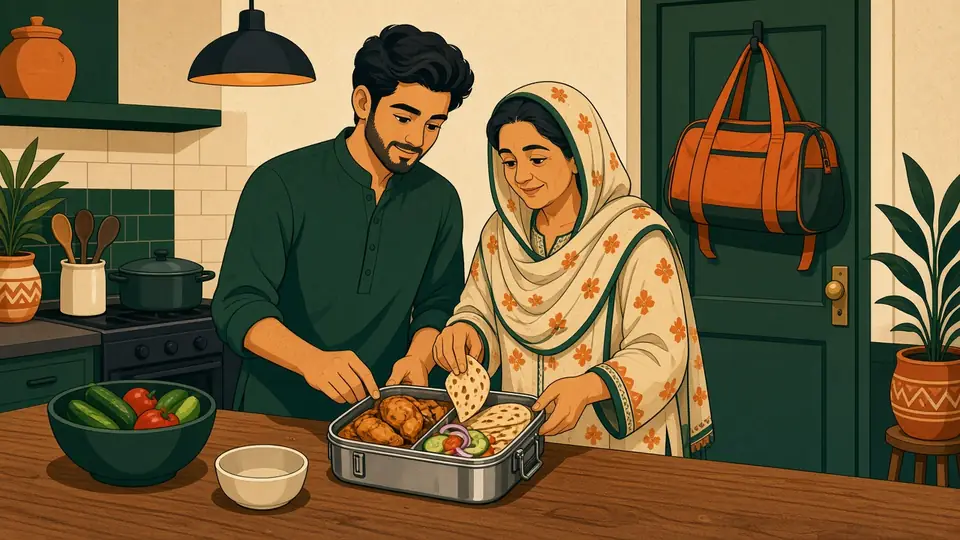
| Lunch | Chicken salan (150 g chicken), 2 chapatis or 1.5 cups rice, salad, raita |
| Pre-workout (1–2 hours before) | 2 slices bread with peanut butter, or 1 cup boiled chana with a banana |
| Post-workout | 1 glass milk or 1 cup dahi, 2 boiled eggs, and a fruit |
| Dinner | Daal (1 bowl) + qeema or chicken (100 g), 2 chapatis, sabzi |
| Before bed (optional) | 1 glass milk |
Sample gym diet plan: fat loss (about 2,000 calories, 130 g protein)
For a 80–85 kg man who wants to lose belly fat:
| Meal | Food |
|---|---|
| Breakfast | 2 whole eggs + 2 egg whites omelette, 1 chapati, chai without sugar |
| Mid-morning | 1 guava or apple |
| Lunch | Grilled or tandoori chicken (150 g), 1 chapati, big salad, raita |
| Pre-workout | 1 cup dahi with a fruit |
| Post-workout / dinner | Daal (1 bowl) + chicken or fish (100 g), sabzi, 1 chapati |
| Snack (if hungry) | Boiled chana or a glass of low-fat milk |
Cut out sugary drinks, fried snacks and mithai as much as possible. They add a lot of calories without filling you up.
What to eat before and after the gym
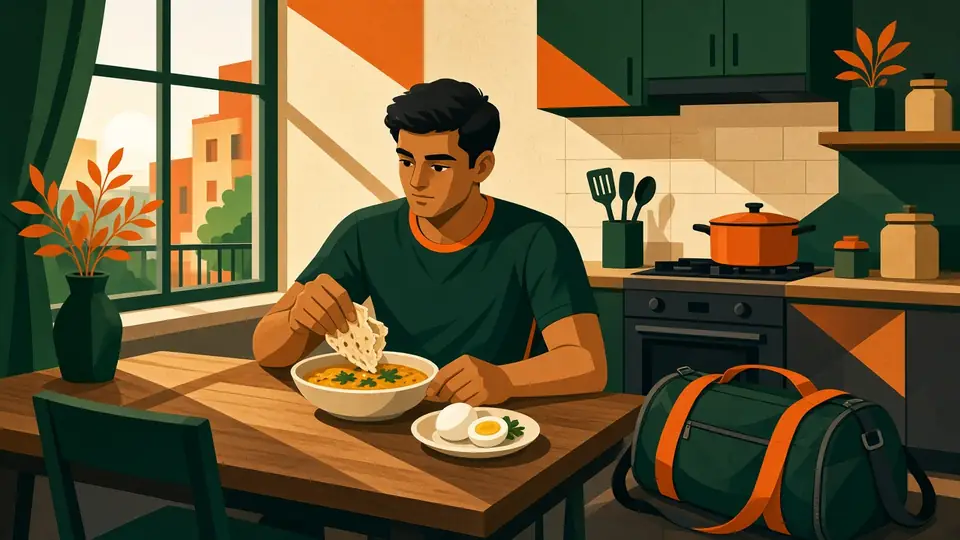
- Before (1–2 hours): a normal meal with carbohydrates and some protein, such as roti with eggs or daal, or a banana with dahi. Avoid a very heavy, oily meal right before training.
- After (within a few hours): a meal with protein (25–40 g) and carbohydrates. There's no need to rush a shake down within minutes; your overall daily protein matters most.
Do you need whey or creatine?
No, but they can be convenient:
- Whey protein is just milk protein in powder form. It's useful if you can't reach your protein target from food. Fake and adulterated products are a real problem in Pakistan, so read our whey protein guide.
- Creatine monohydrate is one of the most researched supplements and helps strength and muscle gain for many people. See creatine: kya yeh safe hai?.
- Avoid "mass gainer tablets", testosterone boosters with big promises and anything that sounds too good to be true.
Water, sleep and consistency
- Water: drink regularly through the day, more in summer and when training. Pale yellow urine is a good sign.
- Sleep: 7–9 hours. Muscle is repaired and built while you rest.
- Consistency: a decent plan followed for 6 months beats a perfect plan followed for 2 weeks.
Pair this diet with a structured programme such as our 12-week body banane ka tarika.
See a doctor promptly if
- You have kidney disease, diabetes, gout or another long-term condition before raising protein or changing your diet a lot.
- You're losing weight without trying, or feel faint or unwell during training.
- You're considering any "weight gain" or "muscle" tablets or injections. Read our warning on steroid-laced weight gain products first.
Frequently asked questions
How much protein do I need for gym?
Research suggests around 1.6 g per kg of body weight per day is enough for most people doing resistance training to maximise muscle gain, with up to about 2.2 g/kg for some.
Can I build muscle without whey protein?
Yes. Eggs, milk, dahi, daal, chana, chicken and meat can easily provide enough protein. Whey is just a convenient option.
Is desi ghee good for gym?
In moderate amounts it's fine as part of your fat intake, but it's very high in calories and saturated fat. A spoon in your daal is fine; large amounts every day aren't helpful.
What should I eat after the gym in Pakistan?
A meal with protein and carbohydrates, such as eggs with roti, chicken with rice, daal with roti, or milk with a banana.
Is it okay to eat rice when trying to lose fat?
Yes, in controlled portions. Fat loss depends on your total calories. Rice can fit into a fat-loss plan, especially around training.
Sources
- Morton RW, et al. A systematic review, meta-analysis and meta-regression of the effect of protein supplementation on resistance training-induced gains in muscle mass and strength. British Journal of Sports Medicine, 2018.
- Jäger R, et al. International Society of Sports Nutrition position stand: protein and exercise. Journal of the International Society of Sports Nutrition, 2017.
- World Health Organization. Healthy diet fact sheet.
- USDA FoodData Central. Nutrient database.
- NHS. Healthy eating for teens and young adults: the Eatwell Guide.
Sources were checked on 26 November 2026. Found an error? Tell us and we will correct it.
Medical disclaimer: This article is general information, not a diagnosis or treatment plan. Please talk to a qualified doctor about your own situation. Read our full disclaimer.