Gym supplements in Pakistan: what's worth it, what's a waste, and what's dangerous
An evidence-based guide to gym supplements in Pakistan: whey protein, creatine, caffeine, multivitamins, BCAAs, fat burners, mass gainers and pre-workouts, plus fake-product risks and how to check a supplement.
Key points
- Only a few gym supplements have strong evidence: creatine monohydrate, protein powder (as a convenient food), and caffeine for performance.
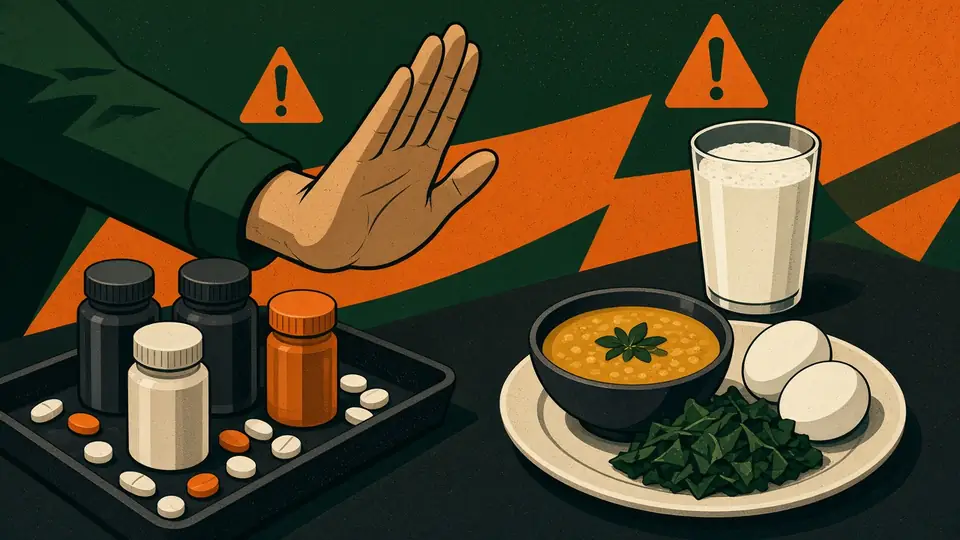
- BCAAs, most fat burners and "testosterone boosters" have weak evidence for most people. Your money is usually better spent on food.
- Fake and contaminated supplements are a real risk. Some products have been found to contain hidden steroids or stimulants.
- Supplements are optional. Training, food, sleep and consistency matter far more.
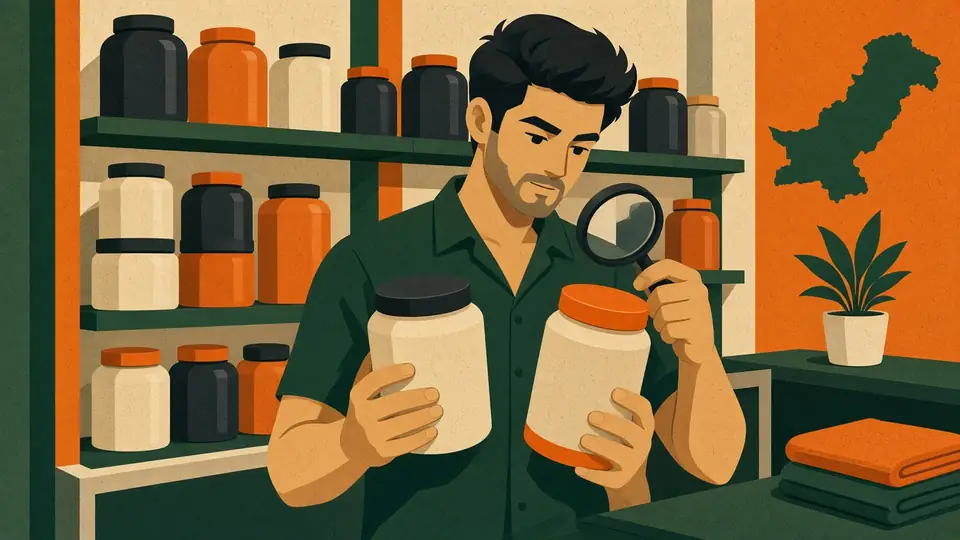
Supplement shops in Pakistan are full of huge tubs, bright labels and big promises: "mass gainer", "shredder", "pump", "testo". Many young men spend more on supplements than on food, yet see little progress.
This guide ranks common gym supplements by evidence, explains the risks of fake products, and helps you decide where your money is worth spending.
Tier 1: good evidence
Creatine monohydrate
The most researched sports supplement. It helps increase strength, power and muscle gains when combined with resistance training. The typical dose is 3–5 g a day. It's generally safe for healthy adults. See creatine: fayde, nuqsanat aur sahi istemal.
Protein powder (whey or plant protein)
Protein powder is just convenient food. It helps if you struggle to reach your protein target from meals. Research shows protein supplementation can modestly improve muscle and strength gains in people doing resistance training, mainly by increasing total protein intake.
If you can eat enough eggs, chicken, daal, milk and yogurt, you don't need it. See whey protein price in Pakistan: real vs fake.
Caffeine
Caffeine (in coffee, tea or tablets) can improve endurance and strength performance. A cup of coffee or strong chai before training does the job for many people. Avoid high doses, especially if you have high blood pressure, anxiety or heart rhythm problems, and avoid it late in the day as it can disrupt sleep.
Tier 2: helpful in specific situations
Vitamin D
Vitamin D deficiency is common in Pakistan. A supplement helps if you're deficient. Ask your doctor about a blood test. Very high doses can be harmful.
Omega-3 (fish oil)
May benefit heart health for some people, but evidence for muscle building is limited. Eating fish is a good alternative.
Multivitamins
Useful if your diet is very limited. They won't build muscle on their own.
Iron
Only if you have confirmed iron deficiency. Unnecessary iron can be harmful.
Tier 3: weak evidence or poor value
BCAAs (branched-chain amino acids)
If you already eat enough protein, BCAAs add little. Whole protein, from food or powder, already contains them.
Mass gainers
Mostly sugar and maltodextrin plus some protein. They add calories, but you can do the same, more cheaply, with milk, bananas, oats, peanut butter and eggs. See weight gain diet for skinny guys.
Glutamine, "hormone support" and herbal blends
Little evidence of benefit in healthy, well-fed lifters.
Testosterone boosters
Most have little evidence and some have contained hidden drugs. See testosterone boosters in Pakistan: evidence check.
Tier 4: risky
Fat burners and "shredders"
Many contain high doses of stimulants. Some have been found to contain banned or hidden drugs. Risks include raised blood pressure, palpitations, anxiety, insomnia and, rarely, liver injury. Fat loss comes from diet and activity.
Pre-workouts with unclear stimulants
Some pre-workout powders contain very high caffeine plus other stimulants. Check the label for the total caffeine dose, and avoid products listing unfamiliar stimulants.
"Weight gain tablets" and injections
Often contain steroids or appetite-stimulating medicines. See weight gain tablets in Pakistan: hidden steroid dangers.
Fake and contaminated supplements
Counterfeit supplements are a known problem in many countries. Fake products may contain less protein than stated, cheaper fillers, or even hidden drugs.
How to reduce the risk:
- Buy from authorised sellers, not random social media pages offering prices that seem too good to be true.
- Check the seal, batch number and expiry date, and whether the label and printing look professional.
- Be cautious with "imported" products that have no local importer details.
- Look for third-party testing for banned substances, especially if you compete in sport. Athletes are responsible for anything in their body under anti-doping rules.
- Avoid products with "proprietary blends" that hide ingredient doses.
Supplements by goal: a quick table
| Your goal | Food first | Supplement worth considering | Usually skip |
|---|---|---|---|
| Build muscle | Protein at every meal, enough calories | Creatine monohydrate; protein powder if short on protein | BCAAs, testosterone boosters |
| Gain weight (skinny) | Milk, bananas, oats, peanut butter, eggs, extra roti | Protein powder or a homemade shake | Weight gain tablets, mass gainers |
| Lose fat | Calorie deficit, high protein, vegetables, fewer sugary drinks | Caffeine from coffee or tea (moderate) | Fat burners, "slimming" teas |
| Endurance and stamina | Carbohydrates around training, water | Caffeine (moderate) | Energy drinks, stamina tonics |
| General health | Varied diet, fruit, vegetables, daal | Vitamin D if a test shows deficiency | High-dose "mega" vitamins |
A word on teenagers
If you're under 18, focus on food, sleep and learning good technique. Creatine is well studied in adults, and there's less research in teenagers. Avoid stimulant pre-workouts and fat burners entirely, and never use steroids or "weight gain tablets".
How to read a supplement label
- Serving size and protein per serving: compare the protein per serving with the scoop size. A 30 g scoop that claims 29 g of protein is not realistic.
- Full ingredient list: every ingredient should be listed with its amount. Avoid "proprietary blends".
- Caffeine per serving (for pre-workouts): many products contain more caffeine than a strong coffee per scoop.
- Manufacturer, importer, batch number and expiry date should all be clearly printed.
- Allergy information: whey contains milk, and some products contain soy or gluten.
A simple supplement decision guide
- Are your basics in place? Training 3–4 times a week, sleeping 7–9 hours, eating enough protein and calories? If not, fix these first.
- Can you meet your protein needs from food? If not, consider a protein powder.
- Want a proven performance boost? Consider creatine monohydrate.
- Are you deficient in something? Get tested before taking vitamin D, iron or other supplements.
- Does it promise rapid results? Walk away.
How much should you spend?
Food first. Many young men in Pakistan are better off spending supplement money on eggs, milk, yogurt, chicken, daal and fruit, which also provide vitamins, minerals and fibre.
See a doctor promptly if
- You develop chest pain, palpitations, high blood pressure, severe headache or anxiety after a pre-workout or fat burner.
- You notice yellow eyes or skin, dark urine or severe tiredness after taking a supplement.
- You have kidney disease, liver disease, heart problems or diabetes, or take regular medicines. Check before using any supplement.
Frequently asked questions
Which gym supplement is best for beginners?
Most beginners don't need any. If you want one, creatine monohydrate has the best evidence, and protein powder helps if you can't eat enough protein from food.
Is whey protein necessary for muscle growth?
No. It's a convenient protein source. You can build muscle with food alone if you eat enough protein.
Are fat burners safe?
Many contain high doses of stimulants, and some have been found to contain hidden drugs. They're not recommended.
Are BCAAs worth it?
If you eat enough protein, BCAAs add little benefit.
How can I tell if a supplement is fake?
Check the seal, batch number and expiry date, buy from authorised sellers, avoid deals that seem too good to be true, and be cautious of poor printing or missing importer details.
Sources
- Kreider RB, et al. International Society of Sports Nutrition position stand: safety and efficacy of creatine supplementation. 2017.
- Morton RW, et al. Protein supplementation and resistance training-induced gains in muscle mass and strength. British Journal of Sports Medicine, 2018.
- Guest NS, et al. International Society of Sports Nutrition position stand: caffeine and exercise performance. 2021.
- NIH Office of Dietary Supplements. Dietary supplements for exercise and athletic performance.
- US Food and Drug Administration. Avoiding products contaminated with hidden ingredients.
- World Anti-Doping Agency. The Prohibited List.
Sources were checked on 26 November 2026. Found an error? Tell us and we will correct it.
Medical disclaimer: This article is general information, not a diagnosis or treatment plan. Please talk to a qualified doctor about your own situation. Read our full disclaimer.